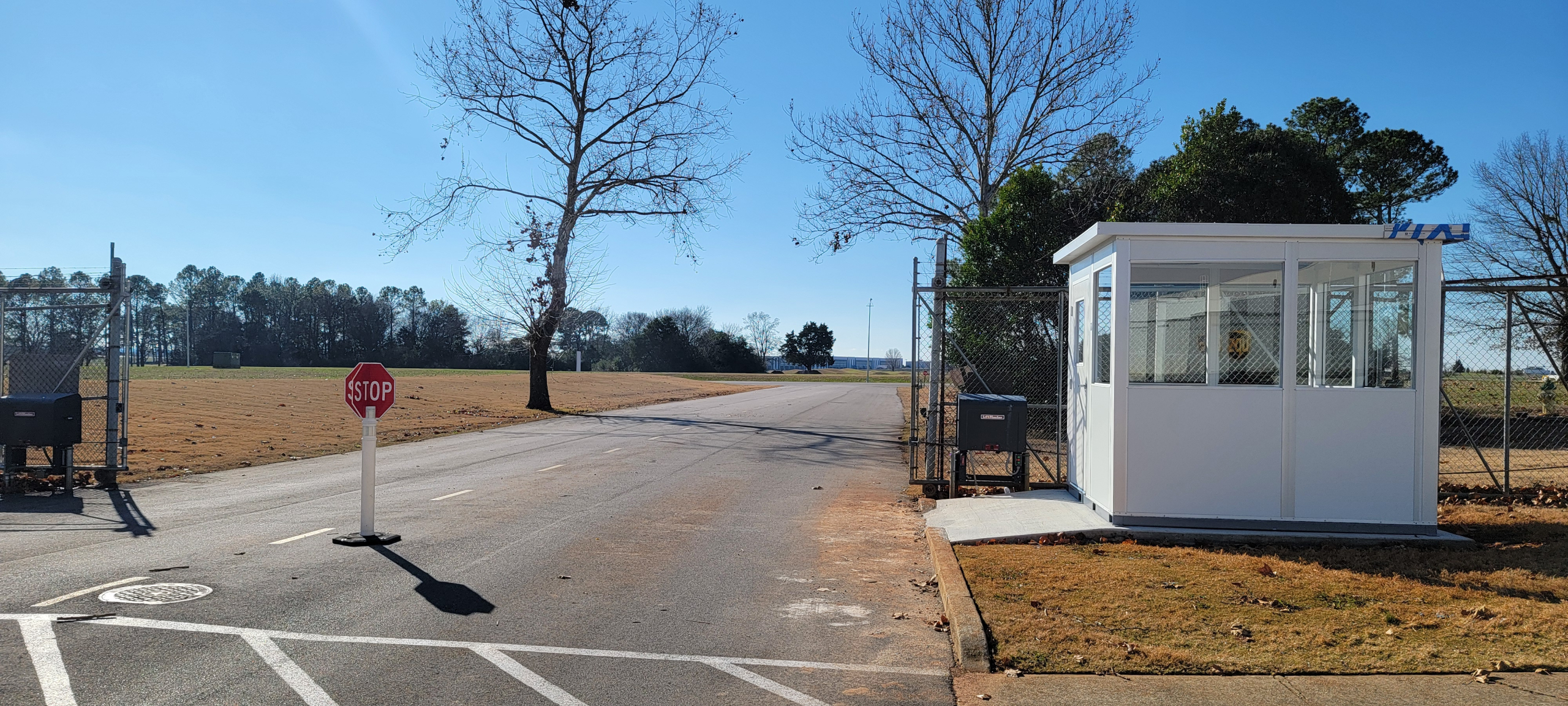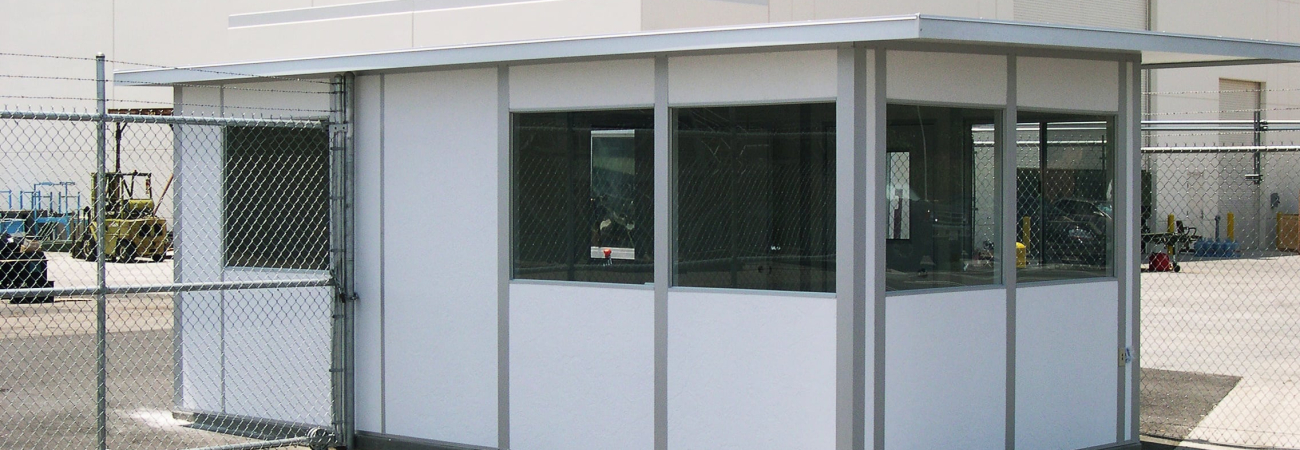
Guard booths can come in many different forms, and what works for one business may not work for another.
Things like size, placement, materials, and security level will all be factors in choosing the right one.
In this article, we’ll walk through the main things to consider.
What Will the Booth Be Used For?
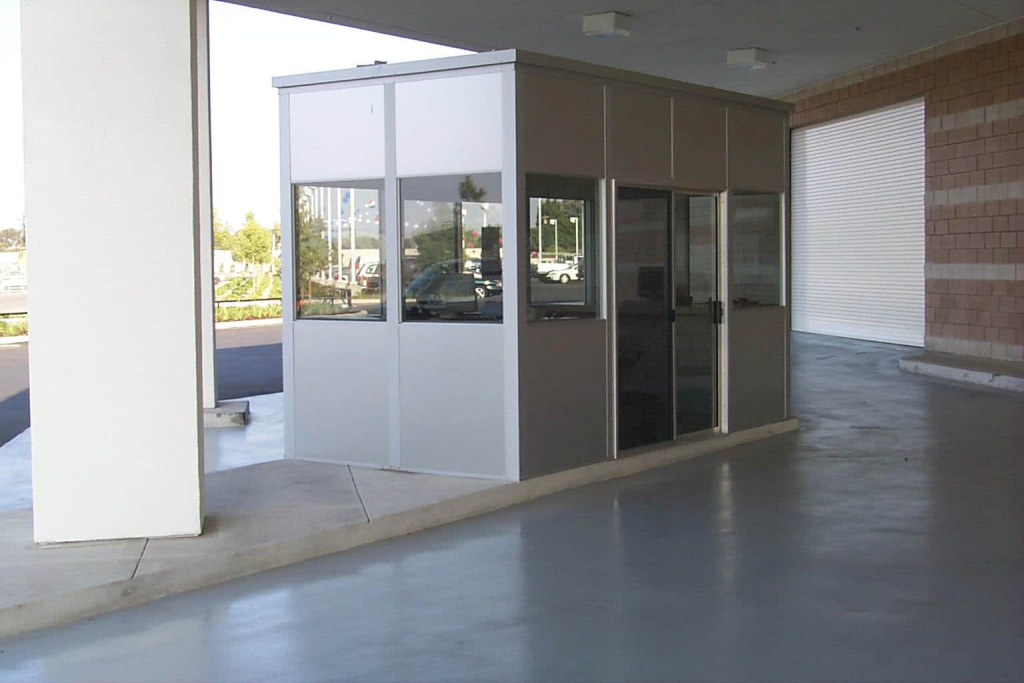
This is really the first thing to figure out, because it affects everything else. A guardhouse meant for gate entry and entry/exit points is going to look pretty different from, say, a parking attendant booth or a ticket window.
Some of the more common uses we see are gate entry and access control, parking management, visitor screening, ticket sales, and general security. But there are plenty of others depending on the industry.
The point is, once you know what the booth is actually supposed to do, the rest of the decisions get a lot easier.
Size

Guard booths can come in all kinds of sizes, and getting this just right matters more than you might initially think.
If your booth is too small it might make shifts rough for your guards/employees. On the other hand, a booth that’s way too big wastes money and takes up space you probably don’t have.
So, how do you figure out the right size? Start by asking yourself a few questions.
How many guards will be working there at the same time? Do they need room for monitors, radios, or other equipment? Does it need to fit in a tight space?
Each booth can be as small as 3’ x 4’ or as large as 9’ x 25’. If you need specific or unusual dimensions though, you can work with our team to create a more customized space.
One thing worth mentioning is that since guards spend long hours in these booths, going slightly bigger than you think you need is almost always the better move. Having a little extra room makes a big difference over an 8 or 10 hour shift.
Location
Placement, or where you decide to put the booth, is just as important as what kind you get.
First of all, you need to make sure that your guards see what you need them to see. In other words, if they need to scan or watch vehicles, the booth should be placed such that they can check traffic or IDs as they come through, without having to step out too far each time.
But this is just one example. The point is that you need to make sure the guard booth is placed so that your team can do their work efficiently.
There’s also the matter of utilities. Most likely, you’re going to need power in there, and probably data too. Make sure the spot you pick either has access already or that you can get it there without too much trouble.
Materials
Most guard booths will sit outside all year. And depending on where you are, that will mean it will have to hold up in all different kinds of weather conditions. The materials you choose will be instrumental in achieving this.
Most guard booths are built with steel or aluminum framing with wall panels designed for outdoor conditions. As long as the materials are commercial grade, the booth should last for a long time without much issue.
For locations where security is a bigger concern, there are also bullet-resistant options. You’ll see these more often at government buildings, military bases, and other high-security sites.
Of course, not every booth needs it, but if your situation calls for it, the option is there.
HVAC Systems
Since guards sit in these booths for 8, 10, sometimes 12 hours at a time, a booth with no AC is hard to justify.
If the booth is going to be used regularly, HVAC is pretty much a must-have. Insulation in the walls can help keep these costs down, too. Without it, the heating and cooling system has to work twice as hard.
Features, Accessories, and More
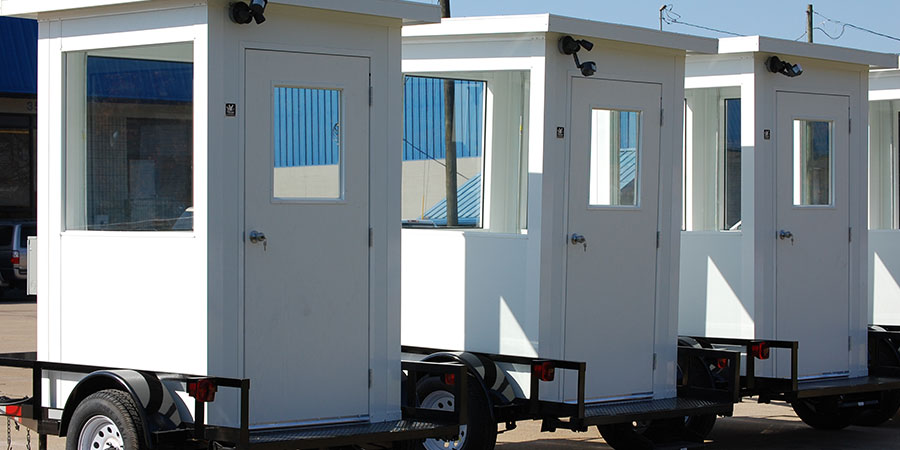
What you need to put in the booth will depend on what it’s being used for. Here are some of the more common features you can choose for guard booths:
- Pass-Through Windows: Common for ticket booths and parking booths. They let the guard exchange money, tickets, or IDs without opening any doors.
- Tinted or Mirrored Glass: The guard can see out, but people can’t see in. Useful for security purposes.
- 360-Degree Visibility: Safety glass windows on all sides to help guards spot potential threats.
- Sliding & Fixed windows: Depends on whether the guard needs to interact with people through the window or is mostly observing.
- Strong and Secure Doors: Available in various styles (sliding, swing, etc.), made from steel, aluminum, wood, vinyl, and more.
- Integrated Electrical: Pre-wired with LED lighting, switches, outlets, and data connections.
- Air Conditioning: HVAC-ready to keep the security team comfortable in any weather conditions.
- Countertops: For keeping equipment organized.
- Spotlights and Exterior Lighting: For nighttime security and visibility around the booth.
- Custom Colors & Finishes: Choose from a wide range of colors and finishes to match branding or color schemes.
- Forkliftable Bases: Lets you pick the booth up and move it later, instead of being stuck on a permanent foundation.
This is by no means an exhaustive list. There are many other security add-ons available as well. For a detailed list, make sure to get into contact with a manufacturer.
The Bottom Line
If you need the short version, choosing a guard booth comes down to a few basic questions, namely: What’s it for? How big does it need to be? Where is it going? And what do the guards working inside it actually need?
If you can get those right, the rest is pretty straightforward.
Allied Modular builds guardhouses and guard booths for commercial, industrial, and government applications. If you need a custom booth, reach out to us today for a quote.