Before you buy a modular office, there are a few things you’ll want to get right. Some of these are obvious, others not so much.
But all of them can end up costing you if you’re not careful.
In this article, we’ll cover the most common mistakes we see and how to avoid them.
1. Buying Based on Price Alone
This is a big one, if not the biggest.
A lot of buyers get three or four quotes and simply go with the cheapest. Why wouldn’t they?
It makes sense on the surface, since to them all quotes are equal.
But the problem is that modular offices aren’t all made the same way. The materials, the fire ratings, the electrical systems, the framing, the insulation, the warranty, etc. All of this varies from one manufacturer to the next, sometimes by a lot.
A cheap office space that starts falling apart in five years is going to cost you way more in the long run than a quality one that lasts 30.
So when you’re comparing quotes, make sure you fully understand what you’re getting for the money.
2. Going Too Small
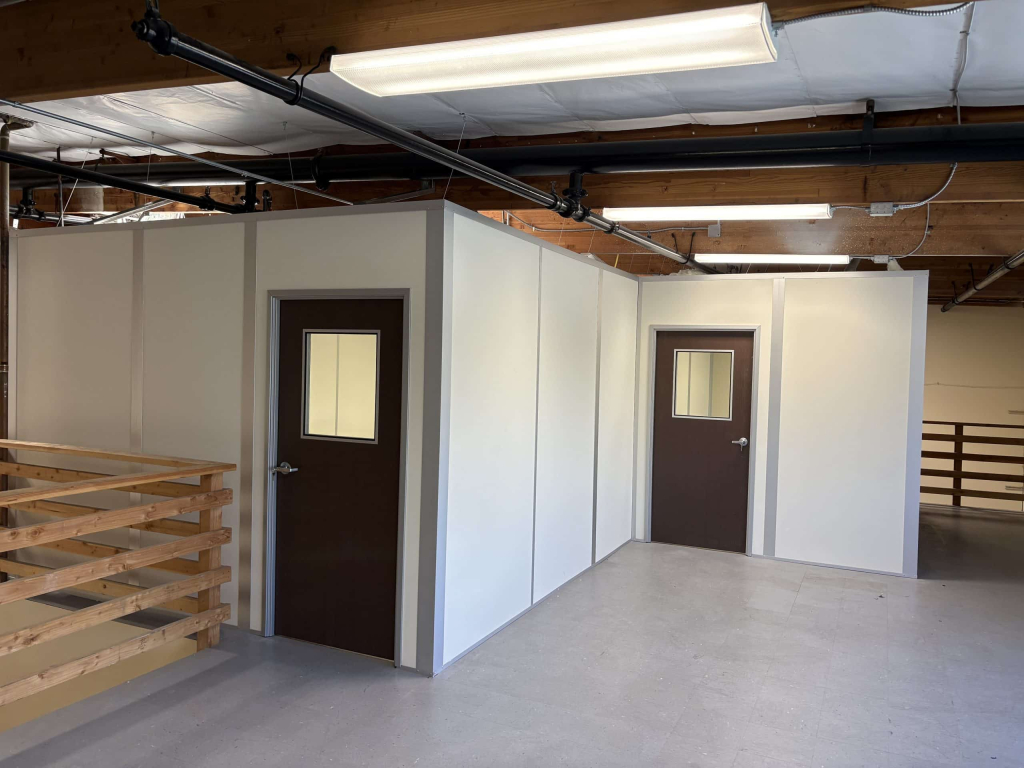
Sometimes, people try to save money or space by going with the smallest possible office. But unfortunately, this usually results in employees feeling cramped.
This is especially common with offices inside warehouses, where workers may be spending long shifts in a tight space. A little extra room goes a long way in these circumstances.
It’s almost always better to go slightly bigger than you think you need.
3. Not Thinking About the Future
What you need right now, you may or may not need in a few years.
Maybe you will hire more people after expanding, or you’ll have to reorganize your layout, or some process will change and the office will need to move somewhere else.
One of the best things about modular is that it can adapt. Walls can come down, sections can be added, and the whole thing can even be relocated if necessary.
But you should really plan for that from the beginning.
If you design the office with zero flexibility in mind, you’re giving up one of the biggest advantages of going with modular in the first place.
4. Ignoring HVAC
This one comes up a lot, especially with offices inside warehouses and factories.
Some buyers figure that a small office might be just fine without its own air conditioner, but there aren’t too many places where that will apply.
Most warehouses are not air conditioned at all, and in the summer it can get blistering hot, needless to say.
Skipping out on a dedicated HVAC system or going cheap when it comes to insulation can make a space nearly unusable at certain times of the year.
5. Not Asking About Electrical

Not all modular wall systems are set up the same way when it comes to electrical. Some have integrated raceways that let you run wiring for outlets, lighting, and data right inside the wall panels.
But others don’t.
If you need power and data connections in your office (and you probably do), this is something to ask about upfront. Trying to retrofit electrical after the walls are already up is both messy and expensive.
Always know what’s included in the building before you sign anything.
6. Forgetting About Permits
Depending on where you are and what you’re building, you may also need a permit. (In most cases, you will.)
The requirements vary by city and state, and they depend on things like the size of the office, whether it’s freestanding, and how it connects to utilities.
This is not the kind of thing you want to figure out after the office is already built.
A good manufacturer should be able to help you figure this out, or at least point you in the right direction.
7. Being Careless With Placement
Where the office goes inside your facility matters more than a lot of people realize.
Is it close enough to the area it needs to serve? Can the people inside it see what they need to see? Is it blocking any aisles, doors, or equipment? Can you get power and data to that spot without too much trouble?
Getting the placement wrong means either living with a bad layout or paying to move the office later, neither of which is ideal.
Make sure to take the time to think this through before anything gets installed.
8. Choosing a Provider With No Installation Team
Last but not least, some modular companies will sell you the panels and then leave you to figure out the installation on your own. Or, they’ll subcontract it out to whoever’s available.
You do not want this to happen. The quality of installation is almost as important as the quality of materials you’re building with.
A bad install can lead to gaps in the panels, doors that don’t close right, and a whole host of other potential problems that you might be dealing with for a long time to come.
Before you buy, ask whether the manufacturer has their own installation team or if they’re sending out subcontractors.
The Bottom Line
Most of these mistakes come down to the same basic ideas. If we had to say one thing, it would be to know and understand what you’re getting from the start. The more you know before you buy, the better the result.
Allied Modular handles everything from design to manufacturing to installation, all with our own team. We’ve been building modular offices for over 30 years, so we’ve seen just about every situation there is.
If you’re thinking about buying a modular office and want to make sure you get it right, reach out to us today.