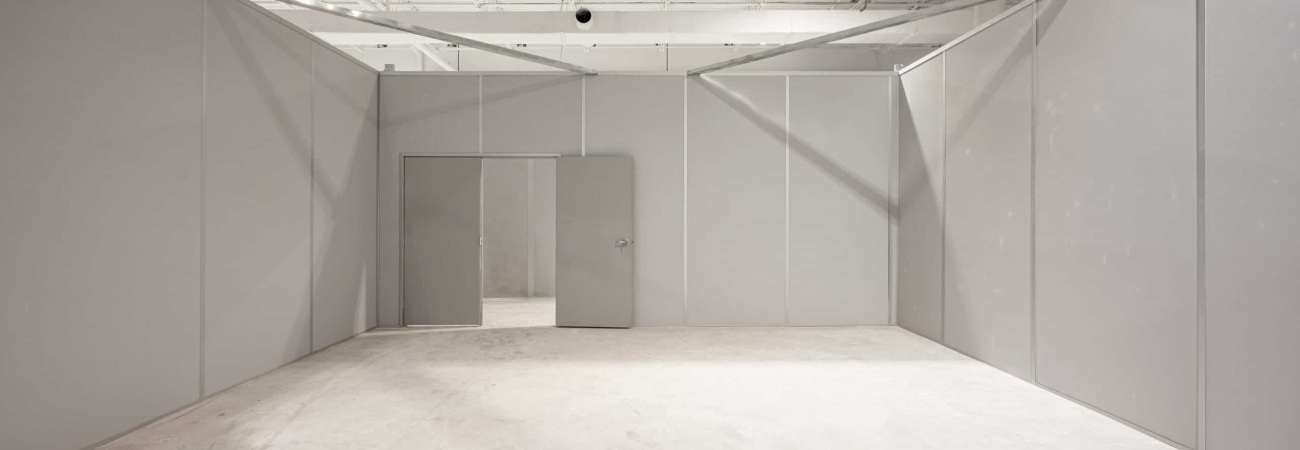
If you’re mulling over modular construction, one of the first things you’ll probably want to know is how fast it can all get done.
Modular buildings are almost always completed much faster than traditional construction, though exactly how fast will depend on a few different factors.
In this article, we’ll break down each phase of the installation process, walk through what can speed things up or slow things down, and compare typical modular timelines to what you’d expect from traditional construction.
The Short Answer
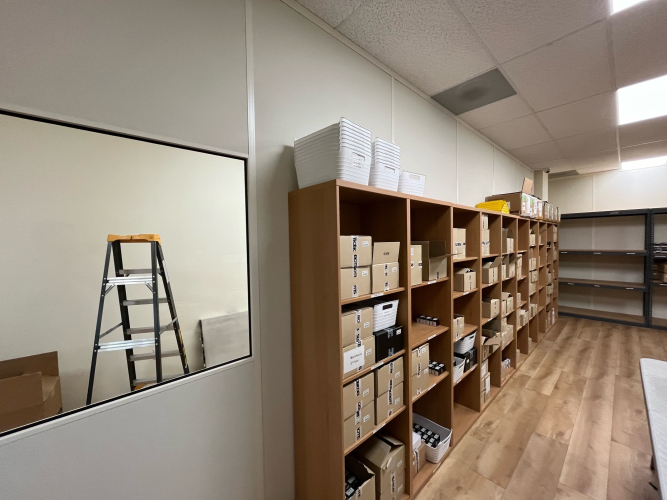
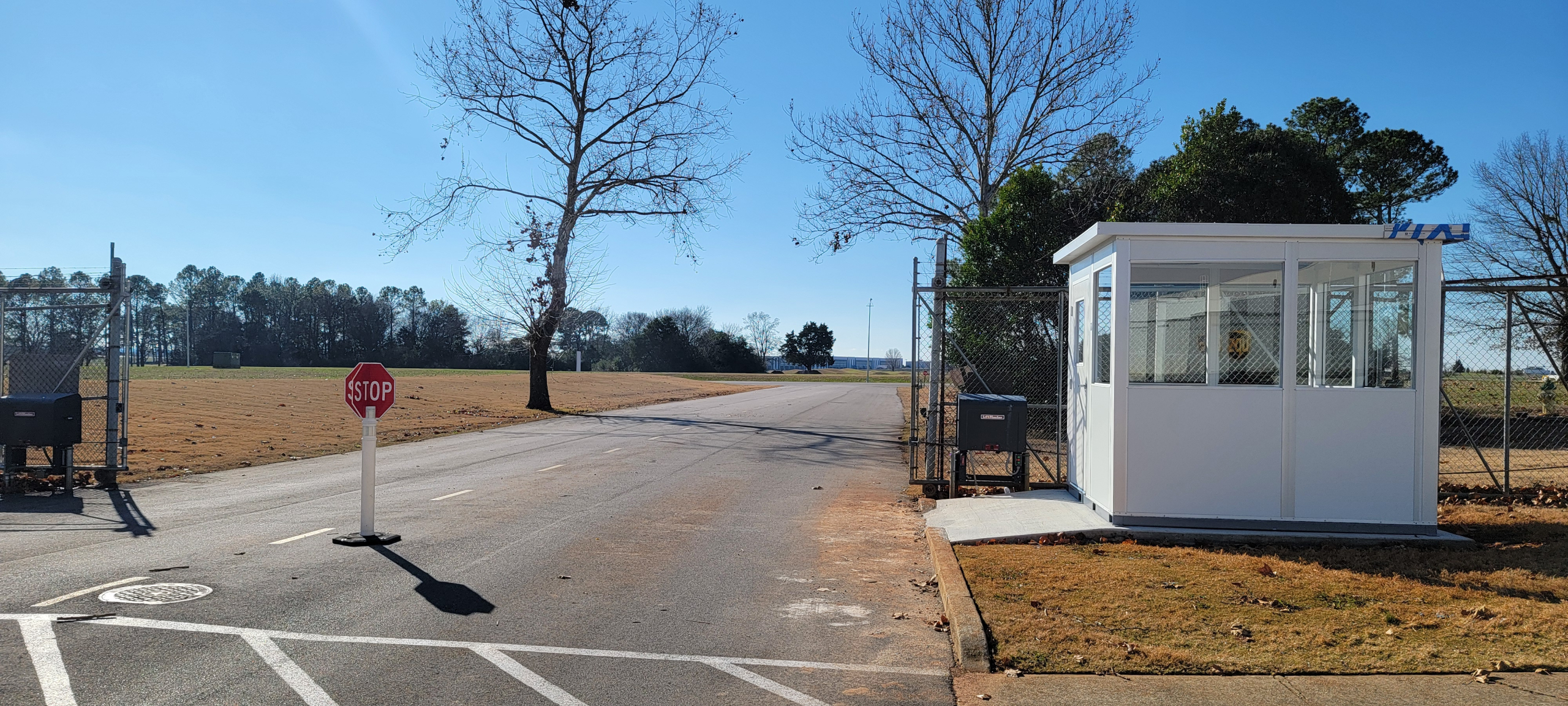
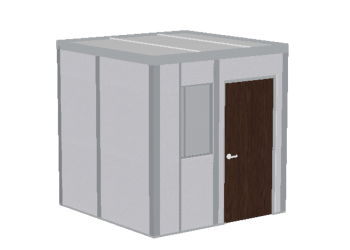
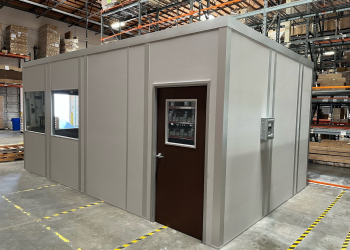
For most modular buildings, you’re looking at 4 to 8 weeks from order to installation. This applies to in-plant offices, warehouse offices, guardhouses, and mezzanines. If your building is easy to make, that is, simple or small, it may be finished faster. Bigger projects with more custom features will naturally take a bit longer.
Understanding the Timeline
There are a few phases in building a modular structure, which are presented below. The accompanying timelines are only estimates. Our typical process looks as follows:
1. Design & Engineering: 1–2 Weeks
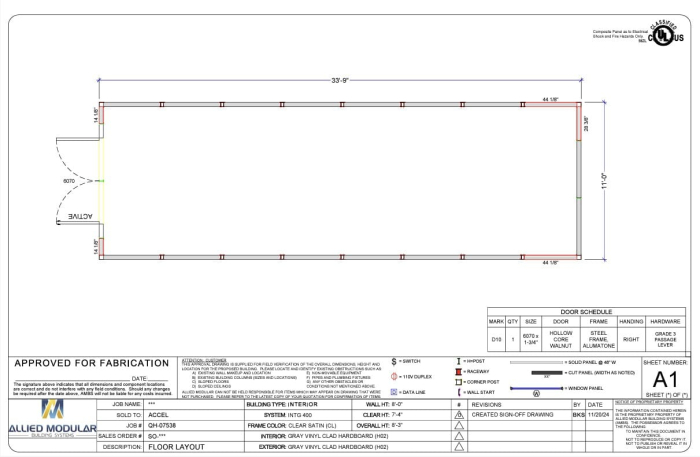
Every project starts with a discovery call, and then a design phase. As you might expect, this is where we figure out what you need and discuss sizes, layouts, finishes, features, and other aspects of the building. We then develop detailed drawings and engineering documentation.
If you need a building permit, this is also when we prepare the architectural package. Permitting timelines vary a lot by municipality, but the design on our end is typically done within one to two weeks.
2. Manufacturing: 2–4 Weeks
After your design has been finished and approved, we then start the fabrication process at one of our three facilities nationwide. Pieces of the building, such as panels, frames, windows, and doors, are made within one of these factories.
It’s important to note that these “modules” are not built at your location, so you will not have to deal with loud noise and debris.
And this is one of the biggest reasons that modular construction is faster than traditional construction. Buildings can be created while “business as usual” is happening at your location. There’s no crew in your facility during this phase.
3. Delivery & Installation: 1–5 Days
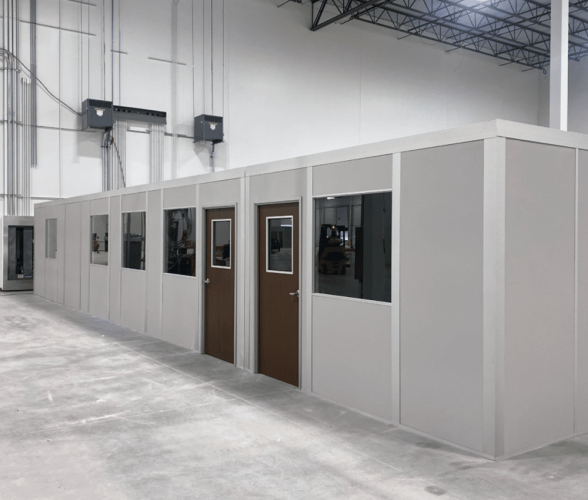
When your building is ready, our installation team comes to assemble and set up your building. For most modular buildings, this is a relatively quick process.
Because Allied Modular’s buildings are designed for interior installation, there’s no crane and no major site preparation needed.
To give you some idea of the amount of time it takes, a small, single-room office might be fully assembled in a day, while a larger, multi-room structure or two-story building will take a few days to a week.
4. Utility Connections & Final Touches: 1–3 Days
The last step is hooking everything up, including electrical, lighting, HVAC connections, and data lines, as well as finishing up any final details. Allied Modular’s wall systems have built-in UL classified electrical raceways, which makes this step faster and cleaner than it sounds.
When we’re done, your building is “turnkey” and ready to use on the spot.
What Variables Can Affect Your Timeline?
We’ve already discussed how the phases listed above are only an estimate, but you may be wondering what those variables are that can make timelines shorter or longer. Here are a few of the most impactful factors:
Permitting
This one can cause the most delays. Some municipalities can process permits quickly, while others take longer. If your building needs a permit, then unfortunately, the overall timeline will depend on your local building department.
Customization
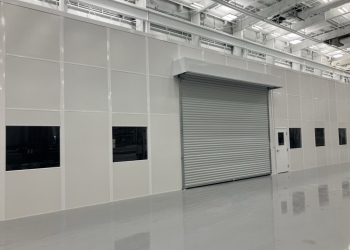
We hinted at this earlier, but a run-of-the-mill, basic office or guardhouse will be ready much faster than a customized cleanroom or even a two-story warehouse office. The more customized the building is, the longer the process can take.
Size
By the same token, larger buildings take longer. There is more to fabricate, and more to assemble. That being said, the relationship is not always linear. Sometimes a big project can move faster than a smaller but more complicated one.
Site Readiness
Because Allied Modular’s buildings are mostly installed inside existing buildings, site prep is usually minimal. However, if your space needs to be cleared, electrical circuits need to be added, or HVAC infrastructure needs to be run beforehand, those tasks may affect the schedule.
How Does This Compare to Traditional Construction?
Traditional, stick-built construction for a comparable office space typically takes 6 to 12 months. What’s more, things often go wrong when working on site, and change orders can become a real headache. It also creates loud noise, dust, and an all-around unpleasant atmosphere to be in, let alone work in.
With modular, most of this work happens off-site at one of our factories, so that by the time our crew shows up, the building is already mostly complete. They are assembling it, not creating it from scratch.
The result is a building that’s completed in a third of the time of traditional construction, and in some cases even less.
The Bottom Line
In short, modular buildings can be finished much faster, because most of the work happens before our crew arrives. From start to finish, most buildings can be completed in 4 to 8 weeks, as opposed to months for traditional construction. And your operations stay up and running the whole time.
If you want to skip the estimates and get a more specific timeline for your project, reach out to us at Allied Modular today.
FAQs About Modular Building Timelines
1. Can modular buildings be relocated after installation?
Yes, absolutely. This is one of the biggest advantages of modular construction over traditional construction. If you move locations, or need to expand, downsize, or reconfigure your space, the building can be disassembled and reassembled elsewhere. It goes without saying that this would be impossible with traditional construction.
2. Do modular buildings require a foundation?
For interior modular buildings, such as in-plant offices and warehouse offices, no foundation is needed. Your existing floor serves as the base. Exterior buildings like guardhouses may have different requirements depending on the installation site.
3. How long do modular buildings last?
Modular buildings can last as long as stick-built buildings. Many last 30 years or more, especially with proper maintenance.