If you’re thinking about buying a modular office, there are a few things worth knowing ahead of time. Some of these might seem obvious, and others may not. Either way, having this information before you start the process will save you time and help you make a better decision.
Here are ten things we think every buyer should know.
1. Modular Offices Are Not Temporary (Unless You Want Them to Be)
A lot of people hear “modular” and assume it means temporary or cheaply made.
Fortunately, this is not the case.
Most modular offices can last for 25 to 35 years, and plenty go beyond that. (We actually wrote a whole article on how long modular offices last.) They’re built from commercial-grade materials like steel, aluminum, and fiberglass-reinforced plastic (FRP). With the same standards as any traditional office.
The word “modular” doesn’t have anything to do with being temporary. In fact, it only means that the office was built in a factory from prefabricated parts (or modules) and assembled at your location, rather than being built on-site with drywall and framing.
What’s different between traditional construction and modular construction is just the method.
2. The Tax Treatment Is Different
This is one that may surprise a lot of people. Because modular offices are classified as tangible personal property (not real property), they depreciate over 5 to 7 years instead of the 39 years (which is what you’d get with traditional drywall construction).
On top of that, under current federal tax law, modular offices may qualify for Section 179 and bonus depreciation. That could mean deducting the full cost of the office in the year it’s installed, rather than spreading it out over decades.
We’re not tax advisors, so definitely talk to your CPA. But this is a real financial advantage that’s worth understanding before you buy. (We wrote a full breakdown of the tax benefits of modular construction if you want to dig deeper.)
3. Installation Is Fast
One of the biggest advantages of going modular is the timeline. Because the wall panels, doors, windows, and other parts are manufactured offsite in a factory, the on-site installation itself is quick.
We’re talking days or weeks in most cases, rather than the months you’d be looking at with a traditional buildout.
And because most of the work happens before anything arrives at your facility, there’s very little disruption to your operations.
4. You Can Move Them Later
This is the one that really separates modular from traditional construction. If your needs change down the road, a modular office can be taken apart, reconfigured, expanded, or relocated.
With drywall, changing your layout in just about every case means demolition, which, for obvious reasons, can really slow your business down.
5. They Can Include Everything a Regular Office Has
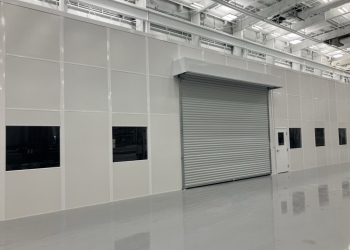
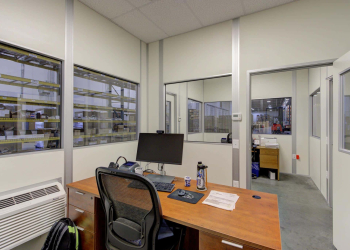
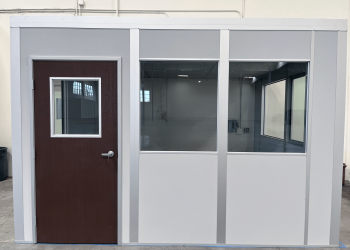
A modular office can include HVAC, electrical, lighting, data and phone connections, doors, and windows, basically everything you’d expect from any office. Some are single-story, others are two stories with staircases.
The point is, modular offices don’t have to look like some stripped-down alternative. They can function as regular offices for decades, and the biggest difference is just in how it’s built.
6. There Are Different Types for Different Needs
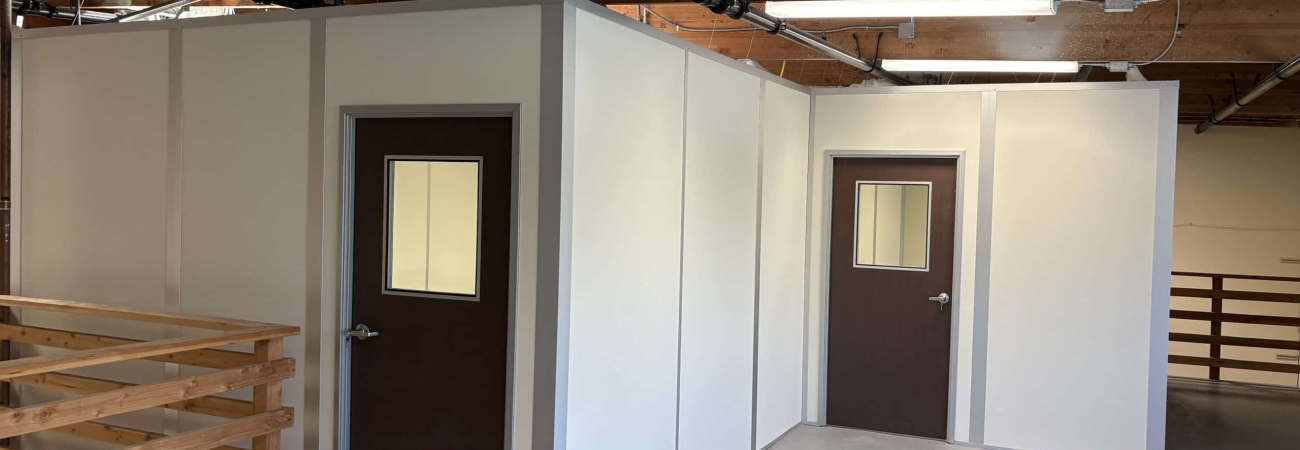
What’s more, not every modular office is the same. What you need depends on your situation. If you need office space inside a warehouse, an in-plant office might be the right fit.
If you’ve got unused vertical space to work with, a mezzanine office could let you build upward instead of giving up floor space.
If you just need to divide an area, partition walls might be all it takes.
The point is, “modular office” is a broad category. Make sure you understand what type fits your specific situation.
7. They’re Better for the Environment
If sustainability matters to you or your organization, modular construction has some real advantages over traditional building methods.
Modular generates less waste, and scrap materials get recycled or reused. What’s more, the panels themselves can be disassembled and used again, which means less stuff going into a landfill.
On top of that, modular wall systems can actually contribute up to 25 points toward LEED certification. That’s significant when you consider that you only need 40 points to reach the base certification level. (More on that in our article about modular buildings and LEED certification.)
8. Each Manufacturer Is Different
This one’s also important. There are a lot of companies out there selling modular offices, but they’re not all selling the same thing.
Things like the quality of materials, fire ratings, and electrical systems can vary a lot from one provider to the next, and those are just a few examples.
You should also inquire about what the panels are made of, the frame material, etc.
These little details matter more than most people realize, and they’ll tell you a lot about what you’re actually getting for your money.
9. You Might Need a Permit
Depending on where you are and what you’re building, you may need a building permit for your modular office. The requirements of course vary by city and state, and they can depend on things like the size of the office, whether it’s freestanding or attached to the building, and how it’s connected to utilities.
This is definitely not something to figure out after the fact. Though many modular manufacturers will help guide you through the permitting process.
10. Make Sure to Plan for the Future
It’s very easy to design a modular office based on what you need today, but it’s important to anticipate your future needs as much as possible. Will you need to add more staff at a later date? Will you need to change the layout? Will any processes need to change?
One of the best things about modular is that it can adapt to changing circumstances. That being said, it adapts a lot more easily if you think ahead.
Talk to your provider about what might change in the next few years, and design the office with that flexibility in mind.
The Bottom Line
Buying a modular office is a big decision, but it doesn’t need to be complicated or difficult. If you understand what you’re getting, how it’s built, and what to look for in a provider, you’re already ahead of most buyers.
Allied Modular has been building modular offices for over 30 years. If you have questions or want to talk through your project, reach out to us today and receive a quote on new spaces.