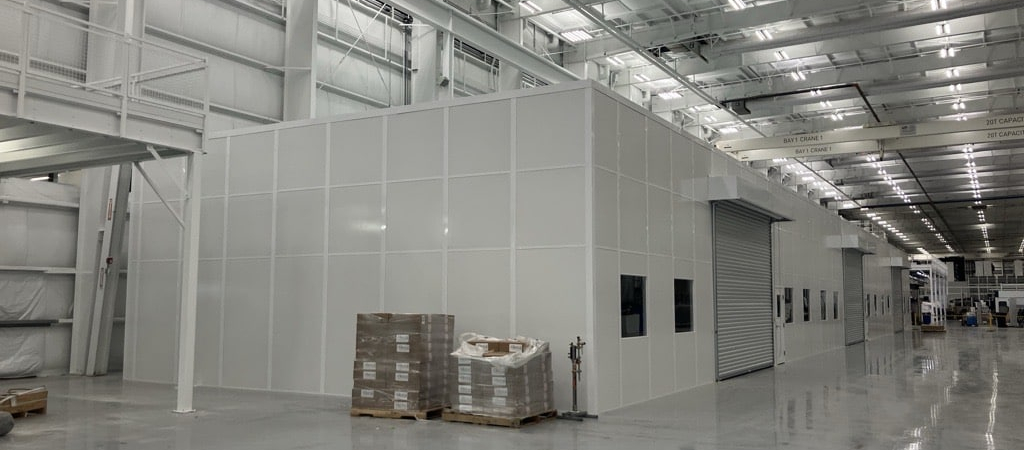
Take two companies and have them each spend $150,000 on new office space inside their warehouse. Have one go the traditional route, while the other goes modular.
At tax time, the traditional building lets you deduct about $3,800. The modular one lets you deduct the full $150,000.
The same investment results in a wildly different tax outcome. How?
In this article, we’ll cover how the IRS classifies modular (and traditional) construction, what depreciation is and why it matters, how provisions like Section 179 and bonus depreciation work, and which modular products typically qualify.
Real Property vs. Tangible Personal Property
Before we get into the specific tax provisions, there’s one concept that needs to be fully understood, namely, how the IRS classifies what you’re building.
The IRS puts business assets into many categories. The two that matter here for us are:
- Real property. This just means permanent property that is attached to land or built into a building’s structure. Things like drywall offices, renovations, or any construction that becomes a permanent part of the building apply here. Real property is depreciated over 39 years. To illustrate, this means that if you spend $200,000 on a traditional office space, you can only deduct about $5,100 per year on your taxes.
- Tangible personal property (TPP). This type refers to assets that can be moved. Think of things like machinery, equipment, furniture, or vehicles. TPP depreciates over just 5 to 7 years, and as we’ll see in the next sections, it can often be written off entirely in year one.
Can you guess which one modular construction fits into?
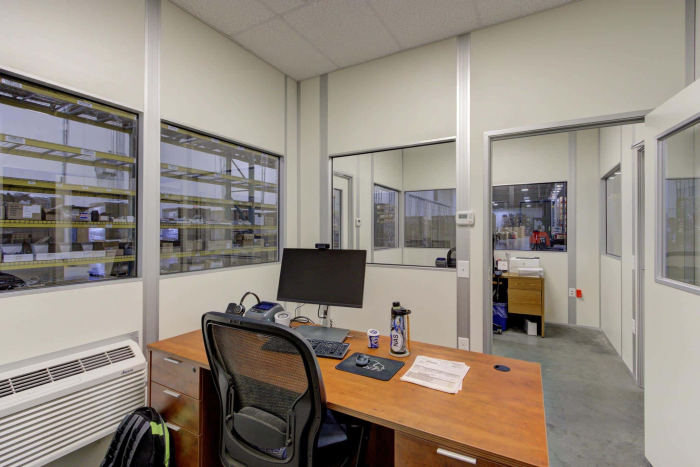
Because modular offices, enclosures, and wall systems are built from prefabricated panels that are fit together (and importantly, not permanently fixed to the building’s structure), they can typically be disassembled, relocated, and reassembled.
This makes them eligible for classification as TPP, not “real” property.
This classification difference is the foundation of every tax advantage we’re about to discuss.
What Is Depreciation (And Why Should You Care)?
When your business buys something, say, some machinery or equipment, you generally cannot deduct the full cost on your taxes right away. The IRS expects you to instead “spread” that deduction out over the asset’s useful life. This process is called depreciation.
The idea behind it is simply that if something is going to be used by your business for 10 years, then you should take 10 years’ worth of deductions rather than one big one up front. Otherwise, businesses could make large purchases and immediately eliminate their tax bill for the year.
The speed of depreciation allowed depends on how the IRS classifies the asset.
For traditional stick built construction, that’s “real” property, and so 39 years of depreciation.
Since most modular construction is classified as TPP, that means 5 to 7 years of depreciation.
In other words, with modular you can depreciate the cost faster, lowering your tax bill to a greater extent than you could with “real property.”
Say you invest $150,000 in new office space inside your warehouse. With traditional construction, you’d deduct roughly $3,846 per year for 39 years.
With modular construction (at a 7-year schedule), you’d deduct roughly $21,429 per year for 7 years.
It’s the same investment and the same space, but with modular, you’re paying less in taxes much sooner.
But it gets even better. There are provisions in the tax code, recently expanded under new federal legislation, that let you skip the 5 to 7 year timeline entirely and deduct the whole thing in year one.
Section 179: Writing Off the Full Cost in Year One
Section 179 lets businesses deduct the full purchase price of qualifying property in the year it’s bought and put to use. No waiting. No spreading it out over decades. You buy it, you install it, you write it off.
Modular offices and enclosures typically qualify because they’re classified as TPP. So the whole cost of your project (including walls, doors, electrical, HVAC, installation, all of it) could be deducted in the same tax year.
The New Limits (Updated July 2025)
The One Big Beautiful Bill Act (OBBBA) was signed into law on July 4, 2025, and it made Section 179 a lot more generous.
The maximum deduction jumped from about $1.22 million to $2.5 million. If your qualifying purchases for the year stay under that number, you can deduct every dollar.
Go above $4 million in total purchases and the deduction starts shrinking dollar-for-dollar. At $6.5 million, it disappears entirely. That’s by design, as Section 179 was built for small and mid-sized businesses.
None of this will matter for most modular projects. A typical in-plant office or mezzanine is well under the $2.5 million cap. Both limits will get adjusted for inflation going forward.
The Income Limitation
One more rule to be aware of: your Section 179 deduction can’t be more than what your business earned that year.
Say your business made $100,000 and you bought a $150,000 modular office. You’d only be able to deduct $100,000. The leftover $50,000 carries forward to next year, but you can’t use Section 179 to put your business into a loss. (Bonus depreciation, which we’ll get to next, doesn’t have this restriction.)
For most modular projects in the $50,000 to $500,000 range, Section 179 covers the whole thing.
Bonus Depreciation: The No-Cap Alternative
Bonus depreciation is another route to a full first-year deduction.
First of all, it has no dollar cap. Unlike Section 179’s $2.5 million limit, there’s no maximum.
What’s more, it has no income limitation, either. Bonus depreciation can actually push your business into a net operating loss (NOL), which can be carried forward to offset future taxes.
It also applies automatically to all qualifying assets in a given class, unless you specifically elect out. Section 179 is something you choose to take.
Under the OBBBA, 100% bonus depreciation has been permanently restored for qualifying property acquired and placed in service after January 19, 2025. Previously, it was scheduled to phase down to 0% by 2027.
For most modular construction projects in the $50,000 to $500,000 range, Section 179 alone covers the full deduction.
You can think of bonus depreciation as the safety net that catches anything Section 179 doesn’t cover, whether that’s because the project is very large, or because your business income is lower that year and the Section 179 income cap becomes a factor.
How Section 179 and Bonus Depreciation Work Together
As we’ve sort of hinted at already, Section 179 and bonus depreciation aren’t mutually exclusive. Businesses can and do use both on the same purchase.
For example, a company that invests $5 million in qualifying modular assets could apply Section 179 to deduct the first $2.5 million, then use bonus depreciation to cover the rest, writing off the entire amount in year one.
This combined strategy is more common with larger projects, but it illustrates an important point, namely that the tax code gives businesses multiple tools to accelerate deductions, and modular construction qualifies for all of them.
What Types of Modular Products Typically Qualify?
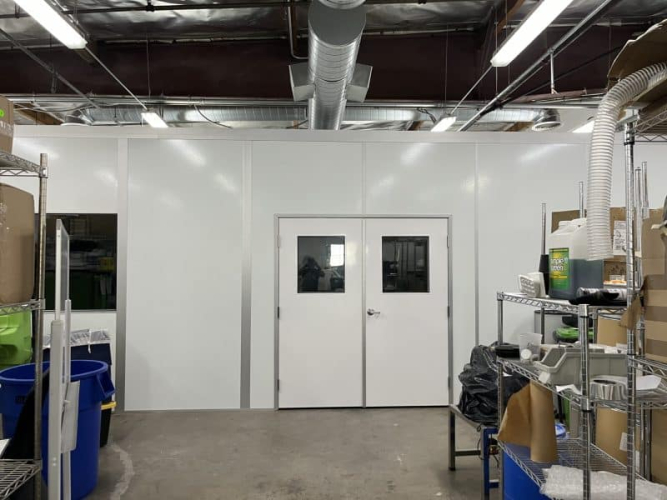
Usually, if a modular product can be disassembled, relocated, and reassembled without causing structural damage to the host building, it’s a strong candidate for TPP.
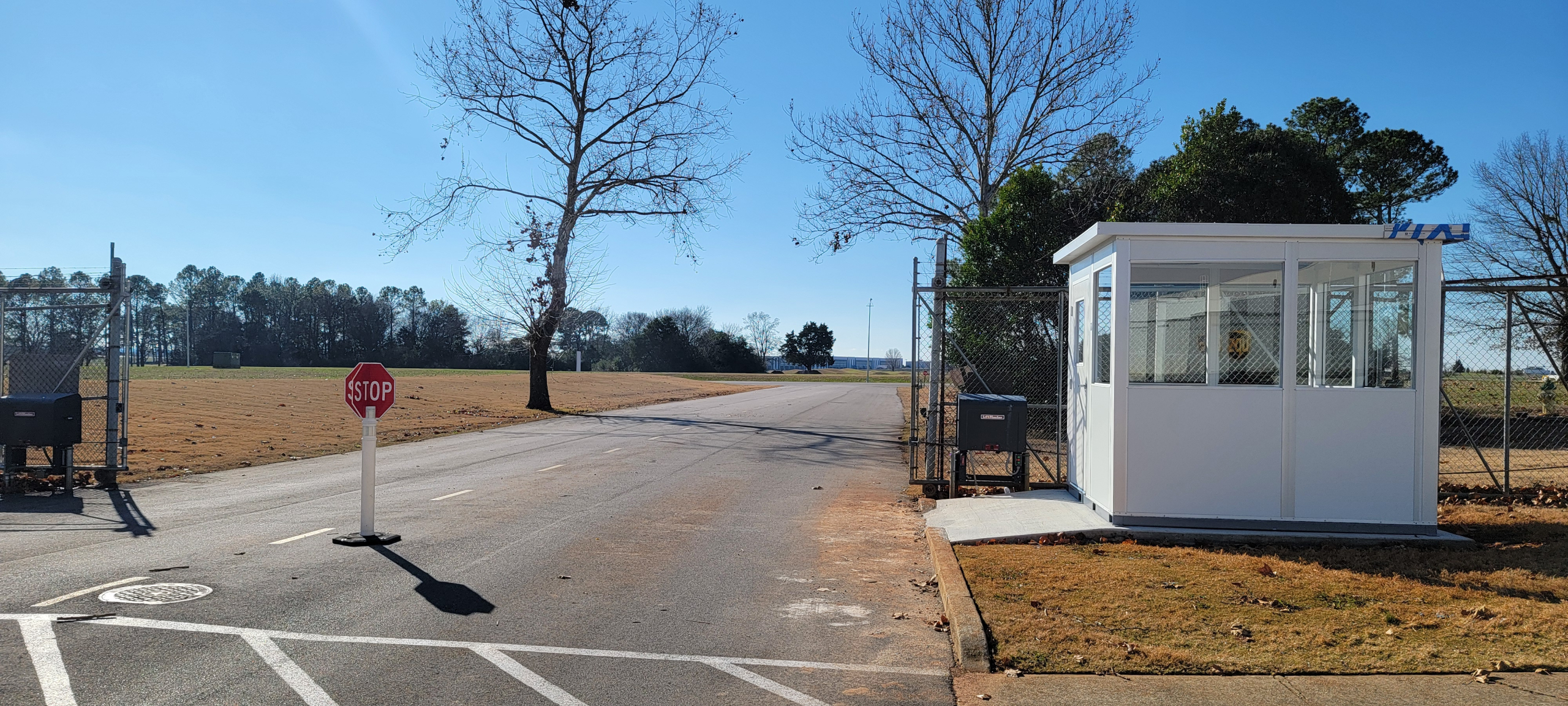
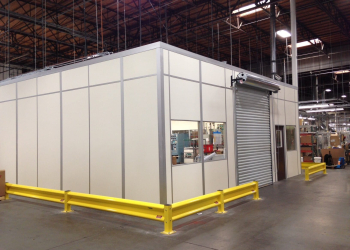
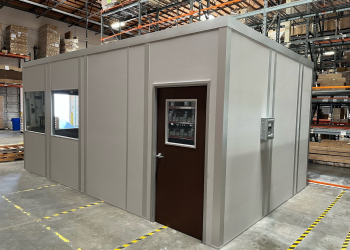
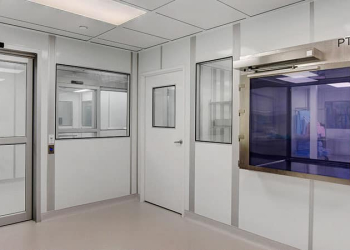
Common examples include in-plant offices, mezzanines, machine enclosures, cleanrooms, partition walls, guardhouses, conference rooms, and break rooms, among others.
There’s one important caveat, however. The classification of a building isn’t automatic. It depends on the specifics, like how the structure is installed, whether it’s anchored to the building’s foundation, and whether it’s realistically movable.
Always work with a qualified tax professional to confirm your project’s eligibility.
The Bottom Line
When businesses choose modular construction, it changes how their investment is taxed. Because many modular buildings qualify as tangible personal property (TPP), rather than “real” property, businesses can often depreciate them significantly faster and, in many cases, deduct the full cost in the first year through provisions like Section 179 or bonus depreciation.
If you’re considering modular offices, cleanrooms, mezzanines, or enclosures for your location, our team can help you design a solution that fits your space and your timeline. Get in touch today to request a quote.
Disclaimer: This article is for informational purposes only and does not constitute tax, legal, or financial advice. Tax laws are complex, subject to change, and vary by jurisdiction. The information provided here reflects federal tax provisions as of the date of publication. Always consult a qualified tax professional to determine how these provisions apply to your specific business situation. Allied Modular Building Systems is not a tax advisory firm and does not provide tax advice.