When it comes to manufacturing, or any business for that matter, you want to avoid disruptions that could affect your bottom line. Changes will inevitably need to take place, though, so it becomes important that such changes take place quickly and without hurting production.
These days, construction doesn’t require long and drawn-out work; and faster methods, such as modular construction, have become a common way to circumvent the drawbacks that traditional construction normally entails.
In this guide, we’ll cover the types of modular buildings manufacturers use, why they work, and what makes them a better fit than traditional construction.
Why Do Manufacturing Plants Need Modular?
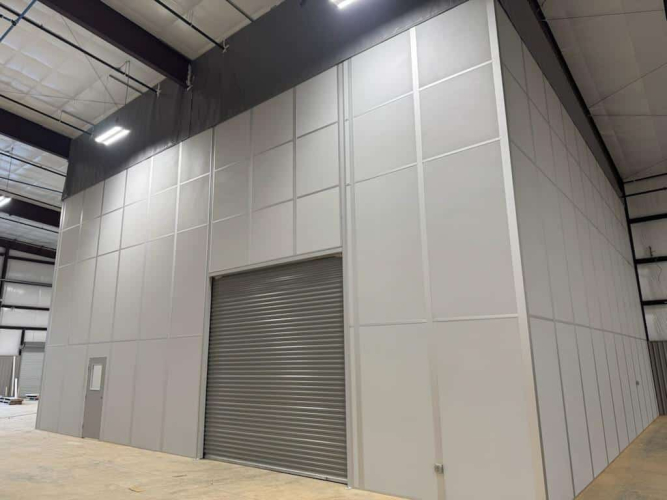
Manufacturing is slightly different from most other industries when it comes to space. The requirements are usually far more demanding, and there isn’t a lot of flexibility regarding downtime/disruptions.
In other words, of course, we mean that production can’t exactly stop. It’s not realistic or practical to shut down an entire production line for a few months merely to build an office, or any other building for that matter. And while a full shutdown is not always required, adding dust, debris, and construction workers walking in and out does not exactly improve efficiency.
On top of that, manufacturing layouts may need to change from time to time. A line that works today might get reorganized next year when a new product is added. The space you build should be able to adapt to that.
And then there’s the issue of compliance. Depending on what you’re manufacturing, you might need temperature-controlled enclosures, noise barriers, or dust containment to meet regulations.
The best part about modular construction is that it checks all these boxes. It’s fast, can be installed without shutting down or disrupting your operation, and it can be reconfigured later when business inevitably changes.
Types of Modular Building Solutions for Manufacturing
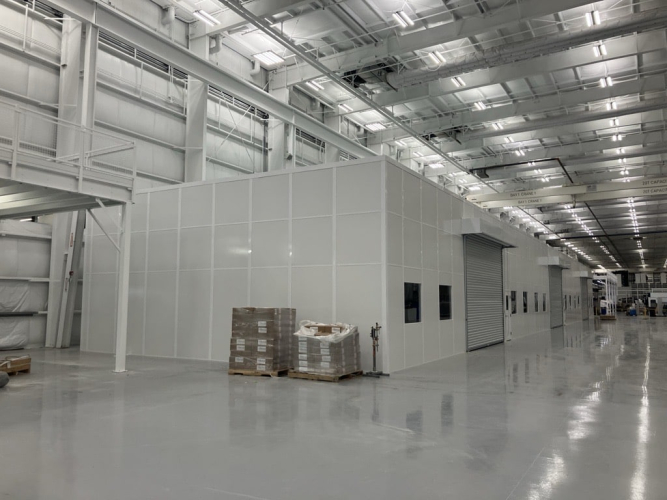
There are many different kinds of modular buildings one might need in a manufacturing plant, but here are some of the most common we see at Allied Modular:
In-Plant Offices
This is probably the most common modular solution in manufacturing. Sometimes office space is needed on or near the production floor, whether for administrative staff, QC teams, or even management.
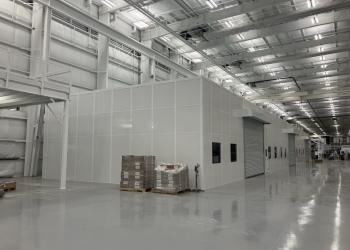
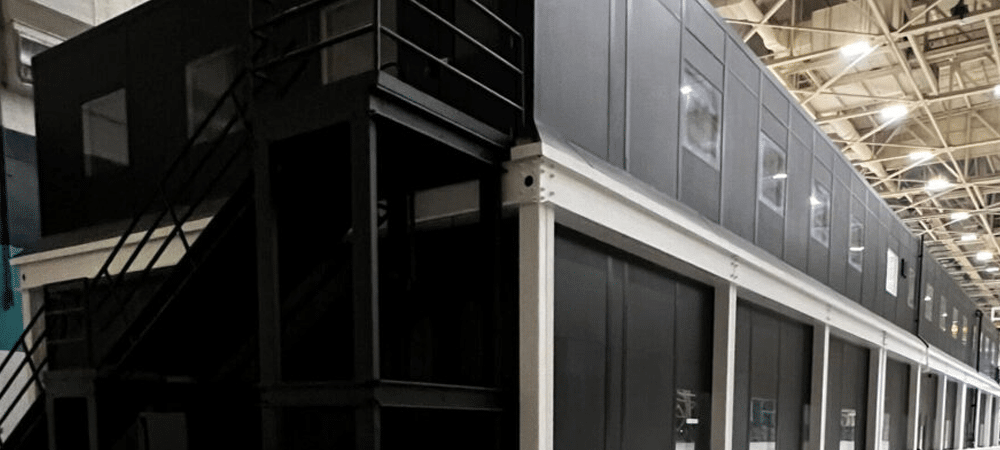
With modular, you can create in-plant office spaces in no time. They can come as single-story buildings or multi-story, and fully equipped with HVAC, electrical, lighting, and data.
Machine Enclosures
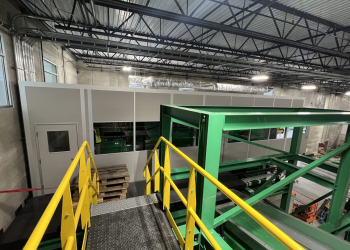
Another common use for modular buildings in manufacturing facilities is machine enclosures. There is a lot of manufacturing equipment that benefits from enclosures, including CNC machines, lasers, CMMs, and EDMs.
Machine enclosures can help with reducing noise and dust, regulating temperature, and even meeting OSHA requirements.
Cleanrooms
Some manufacturing processes require a controlled environment where dust, humidity, and temperature are tightly managed. These highly regulated environments are used often in pharmaceuticals, electronics, aerospace, and medical device manufacturing. Modular cleanrooms can be built to various ISO classifications depending on how strict your requirements are.
Mezzanines
Further, if you’ve got the ceiling height for it, a mezzanine can help you make use of vertical space, which essentially preserves your ground floor for production activity.
By adding a mezzanine, you essentially create a second floor inside your plant which can then be used for offices, storage, observation decks, and more.
It’s one of the top ways to add usable space in a manufacturing environment without having to expand or move locations. What’s more, the ground floor can stay operational during installation.
Partition Walls
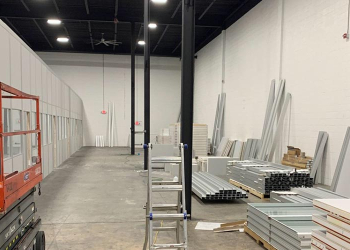
Other times, you may not need a whole room, but just partitions to divide space. With modular partition walls, you can section off production zones, isolate noisy areas, or divide tenant spaces within a shared facility.
They are especially useful in manufacturing, as they can be moved or removed later without any demolition. If the layout changes, the walls change with it.
Break Rooms and Employee Spaces
Finally, there are break rooms and other employee spaces. Manufacturing workers may need somewhere to eat, rest, and relax.
A modular break room or lunch room can be set up inside the plant quickly. The same goes for training rooms, locker areas, and other employee spaces.
While these are some of the most common uses of modular construction solutions for manufacturing, this is by no means an exhaustive list.
At Allied Modular, we also create custom applications depending on your needs, so if you don’t see what you’re looking for above, chances are we can still build it.
Why Modular Works Better Than Traditional Construction in Manufacturing
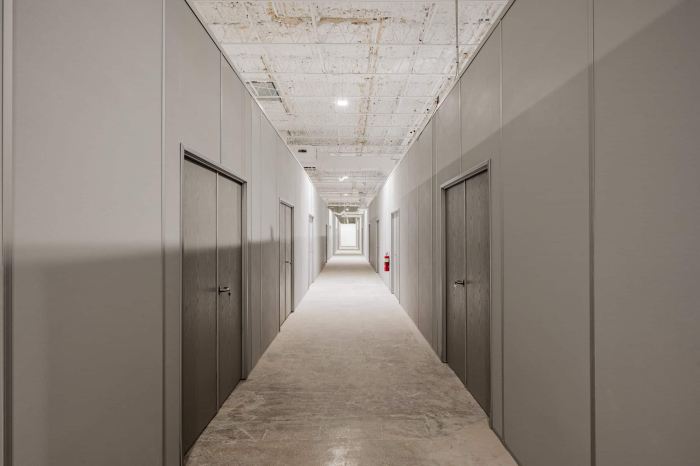
We’ve already hinted at a few different reasons why modular works better than traditional construction for manufacturing environments, but here are the main ones worth considering.
Speed
Modular parts are made offsite in a factory, which means that on-site installation itself only takes days or weeks, as opposed to months in the case of traditional construction. Speed is a big deal for manufacturers who need space now rather than months from now.
No Downtime
This is another important factor. As we’ve touched on already, traditional construction is not conducive to a busy manufacturing facility environment, as it creates a lot of dust, noise, and clutter. Potentially, you could have to shut down part of your operation. Modular avoids most of this because the building is manufactured offsite.
Flexibility
Another big advantage is flexibility, which is somewhat underrated. Layouts in manufacturing environments, for whatever reason, will eventually have to change, whether that’s from the addition of new equipment or because production lines need to get reorganized. One of the best parts about modular walls, offices, and enclosures is that they can be disassembled, reconfigured, expanded, or relocated as you need.
Tax Advantages
Furthermore, because modular structures are classified as tangible personal property, they depreciate over 5 to 7 years instead of 39. Under current tax law, they may also qualify for Section 179 and bonus depreciation, potentially letting you deduct the full cost in year one. (We covered the tax benefits of modular construction in detail here.)
Sustainability
Last but not least, modular construction is a “green” technology. It generates less waste, uses recycled materials, and the parts are reusable. For manufacturers with sustainability goals or LEED targets, modular can contribute up to 25 LEED points. (More on that in our post about modular buildings and LEED certification.)
The Bottom Line
Modular construction gives manufacturers a way to add space without slowing down production. Whether you need offices, enclosures, cleanrooms, or any other type of building, it’s fast, flexible, and built to change with your operations.
Interested in adding modular buildings to your plant? Reach out to us today for a quote on new spaces.