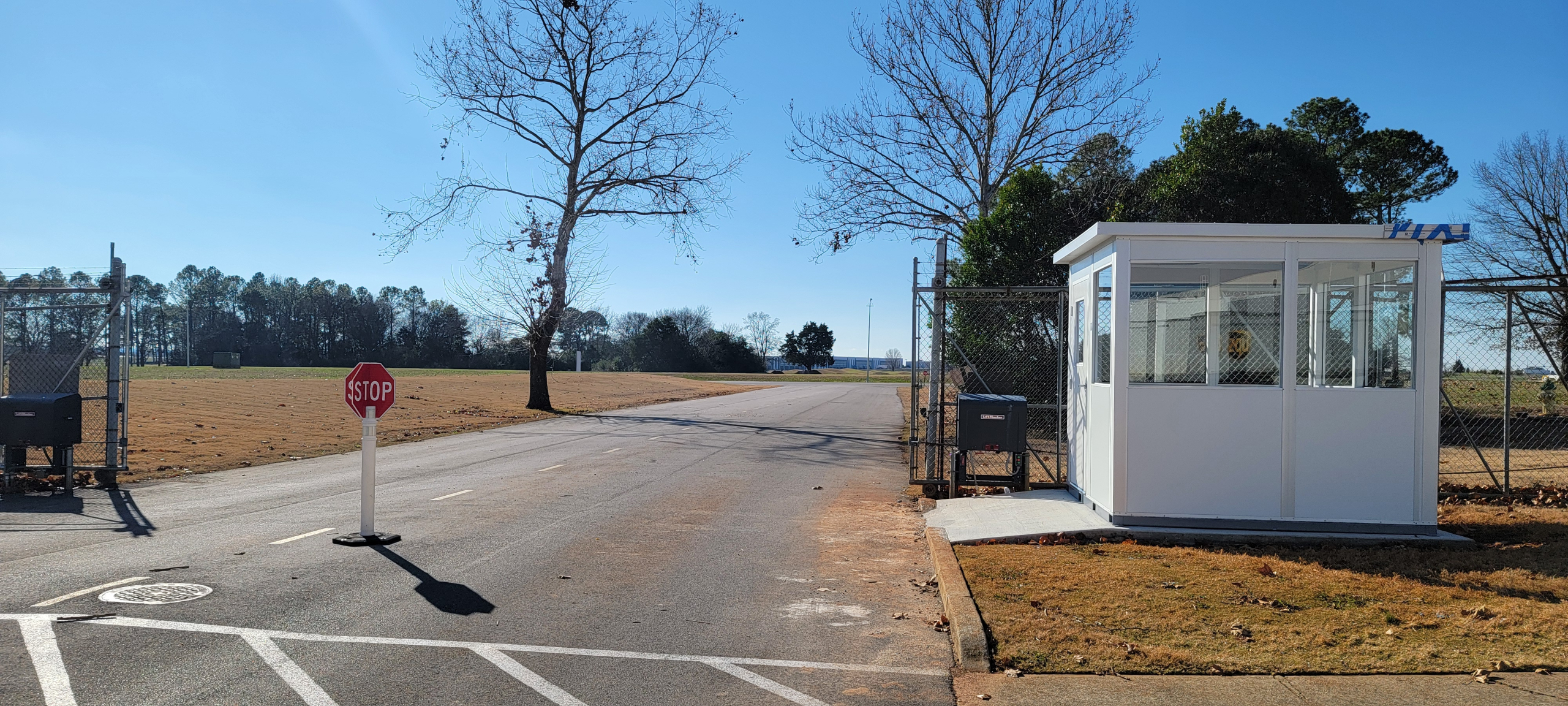
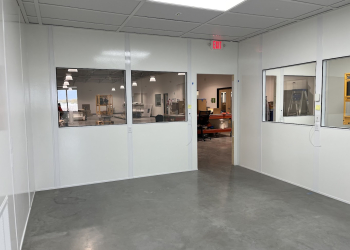
One of the biggest (if not the biggest) selling points of modular offices is that they’re not fixed or permanent. Not, of course, in the “they won’t last” sense. They last decades. But in the sense that if you need to pick one up and move it somewhere else, you actually can.
In this article, we’ll go over how relocating a modular office works, what’s involved, and why it’s one of the main reasons people choose modular in the first place.
Why Would You Need to Move One?
Needing to move an office happens more than you might think.
A company may outgrow its warehouse and need to move to a bigger one, especially after growth. A production line may get reorganized, and perhaps the office is suddenly in the wrong spot. Or, a lease ends. A second location opens up, and you’d rather take your office with you than buy a new one.
There are many different circumstances.
In each case, however, if you had built a traditional drywall office, you’d be tearing it out and starting from scratch at the new location. Obviously, that’s a waste of money.
With a modular office, the same structure can go wherever you go. And in fact, that’s one of the core benefits of modular construction that people tend to overlook until they actually need it.
How Does It Actually Work?
Modular offices are built from prefabricated panels that fit together. They are designed to be assembled on-site, which means they can also be disassembled on-site.
The basic process is pretty simple. First, the panels get unbolted and taken apart, and electrical and HVAC connections get disconnected. The panels are then moved to the new location, whether that means across the warehouse floor or across town. After that, everything gets put back together and reconnected.
If the office is inside a building, like an in-plant warehouse office, this is usually pretty straightforward. The panels come apart, get carried or forklifted to the new spot, and go right back up.
If you’re moving to a different building entirely, the panels get loaded onto a truck and transported. But either way, the process is pretty simple.
It should also be noted that the panels themselves aren’t damaged in the process. They’re completely reusable, and are designed to be taken apart and reassembled.
Can You Change the Layout As Well?
This is where it gets more interesting, especially if flexibility is of particular importance to you.
If you’re already taking the office apart, you’re not stuck with the same layout. You can expand your space by adding panels, remove panels to downsize it, or rearrange the whole layout as needed.
What it is, essentially, is a second (or third, fourth, etc.) opportunity to adjust the office to fit how you actually work now, rather than how you worked when you first had it built.
Needless to say this would be impossible with drywall. You’d be demolitioning the whole thing and starting again from scratch.
How Long Does It Take?
This all depends on the size of the office, as well as how far it needs to go.
For example, a small in-plant office being moved to a different part of the same warehouse might take a day or two. But a larger office being relocated to a new building could take a few days to a couple of weeks, including disassembly, transport, and reassembly.
In any case, it’s a lot faster than building a new office from the ground up.
The Bottom Line
If you’re thinking about going modular and wondering whether you’ll be stuck with it in one spot forever, the quick answer is no. And this perhaps the most important benefit of modular as a whole.
At Allied Modular, we build offices that are 100% relocatable and reconfigurable. If you want to talk through what a move would look like for your setup, reach out to us today.