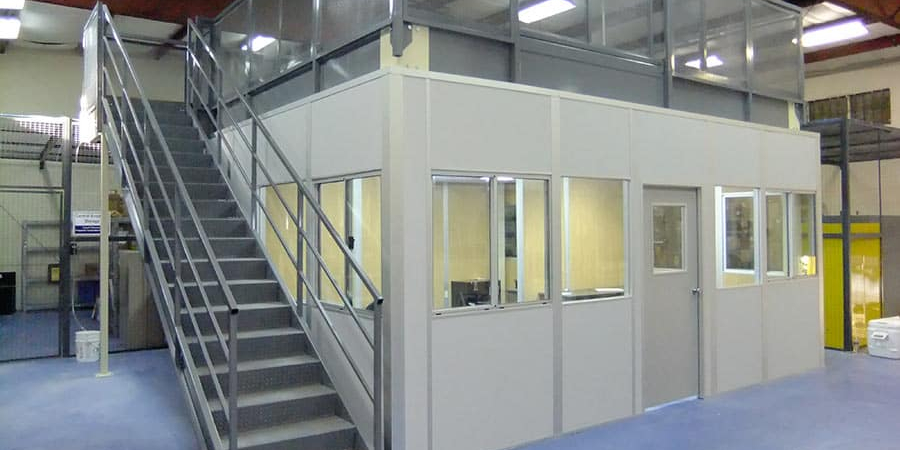
Many warehouses and factories run out of room for ground-floor offices before they run out of vertical space. A mezzanine office is a straightforward solution to this problem, as it converts and unlocks overhead space and turns it into offices, which can be used as meeting/conference rooms, break areas, or even observation decks. What’s more, it accomplishes this without you having to expand your facility.
In this article, we’ll cover what a mezzanine office is, some layout and design considerations, code and compliance, and more.
What Is a Mezzanine Office?
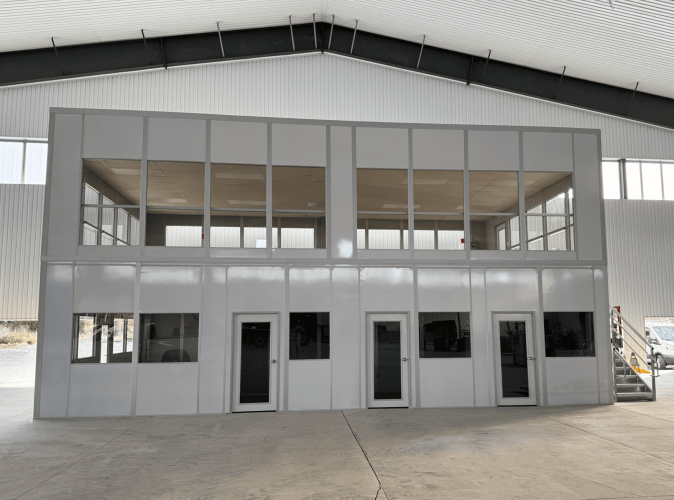
A mezzanine office is basically an intermediate floor built inside your existing building.
It’s a freestanding structure, usually made from structural steel, that sits above your ground-level operations, and creates or “unlocks” usable space without you having to expand your building.
What’s more, you can put just about anything up there, whether you need offices for supervisors or administrative workers, conference rooms, break rooms, observation areas, or even storage.
One of the most convenient aspects of a mezzanine is that it is independent from your walls/roof, so it doesn’t require any modifications to the building itself.
Is Your Facility a Good Fit for a Mezzanine?
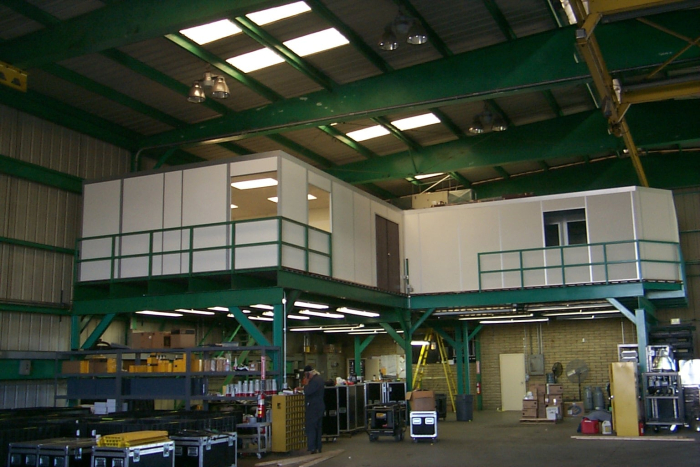
Unfortunately, not every building can fit a mezzanine. Here are the main things to check before going any further:
Ceiling Height
This is probably the first thing to look at. You generally need at least 14 to 16 feet of total ceiling height to make a mezzanine work comfortably. That’s because you need a minimum of about 7 feet of clearance both above and below the mezzanine floor. Any less than that and the space starts to feel cramped, which defeats the purpose.
Load Capacity
Also, whatever is underneath needs to be able to support the additional weight of the mezzanine structure, plus whatever you’re putting on it (people, furniture, equipment, etc.). An engineer can evaluate whether any reinforcement is needed.
Access Points
You’ll need at least one staircase as well, and depending on the size of the mezzanine and the number of people using it, you may need two for egress. Where you place the stairs matters, as you don’t want them blocking aisles, loading areas, or equipment access on the ground floor.
Layout and Design Considerations
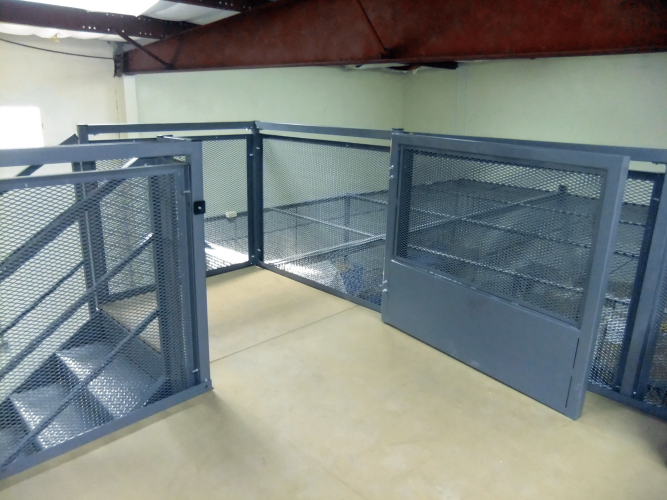
Another important aspect of mezzanine office design is planning how the space will be laid out. Some of the main considerations are:
Size
Under the International Building Code (IBC), a mezzanine is generally limited to one-third of the floor area of the room below. If it exceeds that, it may be classified as a full second story, which comes with a different set of requirements. Keep this in mind when planning how much space you want up there.
Windows
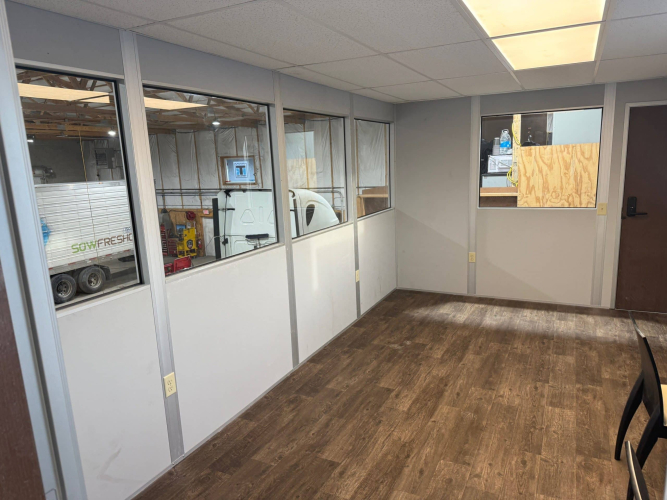
If supervision is part of the purpose, you’ll want large windows facing the warehouse floor. Think about what areas of the floor are most important to see from the mezzanine, and you can position the office accordingly.
Noise Control
Your mezzanine office is most likely going to be directly above a busy environment, whether that’s in a warehouse or factory. Without any sound insulation, the noise from below may make it hard to work. As a result, insulated wall panels and acoustic-rated materials can make a real difference here.
HVAC Systems
Furthermore, warehouses can be extremely hot in summer, or cold in winter. Your mezzanine office may need its own heating and cooling system to keep workers comfortable.
Electrical and Data
Finally, outlets, lighting, phone lines, and internet can all be planned from the start. Modular wall systems with integrated raceways make this a lot easier, since wiring can be run inside the wall panels rather than through conduit on the outside.
Code and Compliance
Unfortunately, mezzanine offices are typically not buildings you can create without approval. There are a few codes and regulations to be aware of, and they of course vary by location. Here’s a quick overview:
The International Building Code (IBC) limits mezzanines to one-third of the floor area below, requires a minimum of 7 feet of clearance above and below, and sets guardrail and egress requirements.
OSHA requires 42-inch guardrails on any open side. Most municipalities require a building permit, which involves submitting plans and scheduling inspections. And depending on your application, you may need fire-rated materials and sprinkler clearance per NFPA 13.
Every project is different, so it’s worth checking with your local building department early in the process.
Benefits of a Modular Mezzanine Office
Beyond adding space, there are some other advantages worth knowing about.
Speed
With modular construction, the mezzanine steel and office wall panels are manufactured at the same time, offsite in a factory. By the time they arrive at your facility, most of the work is already done. Installation typically takes days or weeks, as opposed to months for traditional construction.
Few Disruptions
One of the biggest benefits of going with a mezzanine office is that your business can continue to run during the installation process. There’s no dust or loud noises, and much of the work happens offsite.
Flexibility
If your needs change down the road, a modular mezzanine office can be reconfigured, expanded, or even relocated. The wall panels are designed to be disassembled and reassembled, so you’re not stuck with one layout permanently.
Tax Advantages
Because modular mezzanine offices are classified as tangible personal property, they depreciate over 5 to 7 years instead of 39. Under current tax law, they may qualify for Section 179 and bonus depreciation, which can let you deduct the full cost in year one. (We wrote a full breakdown of the tax benefits of modular construction here, if you want the details.)
Sustainability
Finally, modular construction generates less waste, uses recycled materials, and the parts are reusable. If sustainability matters to your organization, modular mezzanine offices can contribute up to 25 LEED points. (More on that in our post about modular buildings and LEED certification here.)
The Bottom Line
The right mezzanine office design can turn unused vertical space into a code-compliant workplace, without ever needing to expand your facility. With the right layout, materials, and planning, it can become a long-term solution for creating offices, meeting rooms, break rooms, and more.
Interested in creating a mezzanine office at your facility? Reach out to the experts at Allied Modular for a quote today.